Toronto, Ontario Omai Gold Mines Corp. (TSXV: OMG) (OTCQB: OMGGF) ("Omai Gold" or the "Company") is pleased to announce assay results from eleven additional diamond drill holes from the ongoing 50,000 metre ("m") drilling program at its 100% owned Omai Gold Project in Guyana, South America. Each drill hole on the Wenot Deposit encountered multiple gold zones. Hole 26ODD-193 in central Wenot intersected 11 discrete gold zones including 5.12 g/t Au over 40.5m, which included 11.29 g/t Au over 10.4m at a vertical depth of between -260 to -290m within the prolific Dike Corridor. Given that an economic cut-off grade of 0.3 g/t Au was applied to the Wenot open pit deposit, these intersections are very significant.
Five rigs continue to drill at Omai. To date this year, 74 drill holes have been completed, totalling 35,149m. Hole 26ODD-208, testing the depth potential of the Gilt Deposit, was completed at a downhole depth of 1,438m (~1,200m vertical depth). Samples from the upper part of the hole have been submitted for assaying. Certain selected whole core samples are being prepared for mineral processing testing.
Highlights* from the recent drilling include:
(refer to Table 1 for full assay composites and downhole depths):
- Hole 26ODD-193
- 5.12 g/t Au over 40.5m
- Including 11.29 g/t Au over 10.4m
- and including 18.35 g/t Au over 4.5m
- Including 11.29 g/t Au over 10.4m
- 1.37 g/t Au over 26.0m
- 1.48 g/t Au over 14.0m
- 6.45 g/t Au over 2.6m
- 5.12 g/t Au over 40.5m
- Hole 26ODD-192
- 11.16 g/t Au over 3.7m
- 2.71 g/t Au over 14.0m
- Including 17.08 g/t Au over 1.3m
- 4.15 g/t Au over 5.6m
- 0.97 g/t Au over 35.0m
- Including 2.20 g/t Au over 7.8m
- Including 2.20 g/t Au over 7.8m
- Hole 26ODD-194
- 2.20 g/t Au over 14.7m
- Including 24.79 g/t Au over 0.9m
- 5.24 g/t Au over 7.9m
- Including 10.36 g/t Au over 3.5
- 1.11 g/t Au over 17.9m
- 6.54 g/t Au over 3.0m
- 2.20 g/t Au over 14.7m
- Hole 26ODD-197W
- 2.68 g/t Au over 40.7m
- Includes 3.81 g/t Au over 15.7m
- which includes 7.20 g/t Au over 4.9m
- Includes 3.81 g/t Au over 15.7m
- 2.72 g/t Au over 12.9m
- 2.16 g/t Au over 16.0m
- 2.68 g/t Au over 40.7m
- Hole 26ODD-198
- 5.32 g/t Au over 6.0m
- 2.36 g/t Au over 16.4m
- Including 24.34 g/t Au over 1.0m
- 2.29 g/t Au over 21.5m
- Including 4.61 g/t Au over 9.4m
- And including 12.2 g/t Au over 1.3m
- Also including 9.79 g/t Au over 1.4m
- Including 4.61 g/t Au over 9.4m
- Hole 26ODD-199
- 3.78 g/t Au over 9.7m
- Includes 7.75 g/t Au over 3.6m
- 1.80 g/t Au over 15.0m
- 1.67 g/t Au over 10.6m
- 9.0 g/t Au over 1.4m
- 3.78 g/t Au over 9.7m
- Hole 26ODD-191
- 4.37 g/t Au over 7.5m
- Including 6.90 g/t Au over 3.0m
- 5.17 g/t Au over 7.4m
- Including 8.04 g/t Au over 4.4m
- Including 8.04 g/t Au over 4.4m
- 4.37 g/t Au over 7.5m
- Hole 26ODD-190
- 3.15 g/t Au over 13.9 m
- Including 22.95 g/t Au over 1.4m
- 2.0 g/t Au over 9.8m
- 8.03 g/t Au over 2.6m
- 1.63 g/t Au over 8.3m
- 3.52 g/t Au over 3.3m
- 2.73 g/t Au over 4.4m
- 3.15 g/t Au over 13.9 m
- Hole 26ODD-188
- 4.14 g/t Au over 6.7m
- 1.97 g/t Au over 8.0m
- Including 4.25 g/t Au over 2.6m
- 18.91 g/t Au over 0.6m
Elaine Ellingham, President & CEO, commented: "We are pleased to deliver further strong drill results from Wenot. Drilling is expected to continue through to mid-December with the five rigs. Our Preliminary Economic Assessment ("PEA")1 recently announced for the Omai Project, exceeded our long-established target for a 250,000 to 300,000 ounce per year mine, as we delivered a mine plan for production averaging 351,000 oz per year over an 18-year mine life. Our drilling continues to be highly effective; over the past 16 months, we increased the Omai Mineral Resource Estimate (MRE) by 86%, allowing us to reach this much larger mine plan and also a much lower than market-anticipated strip ratio. With a larger mine comes increased upfront capital requirements, however, this optimizes economics and further establishes Omai as one of the largest undeveloped gold projects in South America. With the current gold price around $4,500/oz, the Omai PEA supports a net present value (NPV) of $6.2 billion, at a 5% discount. With this strong PEA, we are on a clear trajectory for advancing Omai to the next milestones.
Today's drill results continue to demonstrate the potential for the Wenot open pit deposit to continue to expand, while we upgrade the resources and better delineate the very wide and robust zones, particularly in the dike corridor. These new drill results also reinforce our confidence in future expansion of the gold zones on the southern side of the Wenot deposit, within the sedimentary sequence. Significant new, sediment-hosted gold zones announced include: 4.61 g/t Au over 9.4 m (hole 198), 1.67 g/t Au over 16.9m (hole 193), 6.54 g/t Au over 3.0m (hole 194), and 2.0 g/t Au over 9.8m. To date, we have completed an additional 77 holes, totalling 37,077m, that are not included in the April 2026 MRE. The results from this program will contribute to our next resource update, planned for completion before year end, and support our objective of advancing the project towards a feasibility study."
The current results from the Wenot deposit can be expected to contribute to both upgrading some of the large inferred resource while continuing to expand several of the gold zones. The geological model was refined for the April MRE update, after significant additional drilling. Subsequent drilling continues to show that the model is performing well.
CENTRAL WENOT
26ODD-188 (305130E) is an upper cut to holes 21ODD-003 and 26ODD-183. The upper portion of hole 188 intersected two main gold zones within the dike corridor, including 4.14 g/t Au over 6.7m and 1.30 g/t Au over 7.6m. These correlate to the intercept in hole 183 of 2.96 g/t Au over 14.3m approximately 40m below.
The hole continued into the CQFP where it intersected 1.97 g/t Au over 8.0m, including 4.25 g/t Au over 2.6m. Within the southern sediments, four mineralized zones were intersected, the best being 1.25 g/t Au over 7.8m and 1.44 g/t Au over 4.8m. The very predictable southern porphyry ("SPOR") marker unit assayed 18.91 g/t Au over 0.6m. This narrow unit can be identified the full strike length of the Wenot deposit, over 2km. The gold grade is highly variable, possibly related to coarse gold.
26ODD-192 (305380E) was collared on the north side of central Wenot and drilled to the south. This hole tested the up-dip extension of multiple gold zones intersected in hole 172 in the Dike Corridor within the volcanics, which returned 4.19 g/t Au over 6.0m, 4.48 g/t Au over 6.0m, and 2.18 g/t Au over 8.0m. Similarly, hole 192 intersected several gold zones within the Dike Corridor, including 4.12 g/t Au over 10.7m (including 11.16 g/t Au over 3.7m), 2.71 g/t Au over 14.0m (including 17.08 g/t Au over 1.3m), 4.15 g/t Au over 5.6m (including 15.47 g/t Au over 1.4m), and 0.97 g/t Au over 35.0m. In aggregate, 67.6m within the Dike Corridor are mineralized. Gold mineralized intervals in the sediments assayed 1.55 g/t Au over 5.5m and 1.24g/t Au over 2.2m.
26ODD-193 (305230E) (see Figure 2. Cross Section) was drilled to the south and most notably intersected an impressive 5.12 g/t Au over 40.5m at a vertical depth of between 260m to 290m, which includes a high-grade zone of 11.29 g/t Au over 10.4m within wide, extensively-altered felsic dikes within the prolific Dike Corridor. Approximately 125m below, hole 124W intersected 2.64 g/t Au over 41.8m within this same horizon. This felsic unit is roughly 75m north of Wenot's central contact between the sedimentary and volcanic sequences. Typical of the drill holes in the Central Wenot area, hole 193 intersected all of the main lithologic units in sequence from north to south, including the volcanics, Dike Corridor, central contact quartz feldspar porphyry ("CQFP"), protomylonite, sedimentary sequence and through to the southern QFP ("SPOR"). A total of 11 gold zones were intersected. Two minor gold zones were intersected in the volcanics, 1.82 g/t Au over 3.7m at a vertical depth of 90m and 4.66 g/t Au over 1.1m at a vertical depth of 136m.
Six separate gold zones were encountered within the Dike Corridor. The best zone, assaying 5.12 g/t Au over 40.5m, as mentioned above. Additional zones from the Dike Corridor include 1.53 g/t Au over 4.9m, 1.10 g/t Au over 4.2m, 6.94 g/t Au over 1.4m, 3.17 g/t Au over 2.1m, and 6.45 g/t Au over 2.6m. The CQFP assayed 1.48 g/t Au over 14.0m.
Within the southern sediments, a wide gold zone of 1.37 g/t Au over 26.0m was intersected.
26ODD-194 (304880E) intersected gold zones in all lithologies drilled. It was collared on the north side of Wenot. It tested the up-dip extension of two very wide gold zones encountered in hole 23ODD-065 that returned 4.54 g/t Au over 27.5m and 1.83 g/t Au over 25.5m in the Dike Corridor.
The Dike Corridor was intersected starting 77m downhole, consisting felsic and diorite dikes intruding the volcanic sequence. Five gold zones were intersected in silicified felsic dikes with up to 1% disseminated pyrite and multiple visible gold (VG) specks within quartz-ankerite veins. The best intercepts in the dike corridor include 2.20 g/t Au over 14.7m (including 24.79 g/t Au over 0.9m) and 5.24 g/t Au over 7.9m. Further downhole, at 308m, the Central contact complex was intersected consisting of the quartz feldspar porphyry ("CQFP"), diorite, and protomylonite with quartz-ankerite veins, approximately 1% disseminated pyrite, and one VG speck. Gold intercepts include 1.11 g/t Au over 17.9m and 1.27 g/t Au over 7.0m. Within the southern sedimentary sequence, seven gold zones were intersected, the best being 6.54 g/t Au over 3.0m including 12.68 g/t Au over 1.5m.
26ODD-196 (305630E) was collared in the sediments and drilled to the north, drilled to test the shallower areas. An assay of 1.52 g/t Au over 3.0m was intersected in the saprolite, very far south of known Wenot zones. Six zones were encountered within the sediments, the best being 2.46 g/t Au over 4.5m, including 6.92 g/t Au over 1.0m. A minor gold interval in a felsic dike north of the sediment-volcanic contact returned 1.29 g/t Au over 1.5m. The CQFP was intersected at 390m downhole (-260m vertically) but was not mineralized. This section in the east central pit is unusual in that the CQFP did not run gold. A hole cutting the CQFP about 35m below ran 1.68 g/t Au over 7.0m. This hole was not extended far past the central contact since other holes had well tested the area to the north.
26ODD-198 (305330E) was drilled to the south almost 100m above hole 121 that returned several high-grade intercepts in the dike corridor including 9.85 g/t Au over 2.9m, 13.74 g/t Au over 3.5m, and 11.26 g/t Au over 2.0m. Hole 198 intersected eight impressive gold-mineralized intervals in the dike corridor with the best include 5.32 g/t Au over 6.0m, 2.36 g/t Au over 16.4m (including 24.34 g/t Au over 1.0m), 1.64 g/t Au over 10.0m and 4.43 g/t Au over 2.3m. The hole continued into the CQFP with mineralized quartz veins that returned 1.01 g/t Au over 10.9m. Further downhole, five mineralized intervals were intersected in diorite-intruded sediments with several occurrences of visible gold. The best intervals include 2.29 g/t Au over 21.5m, 4.61 g/t Au over 9.4m (including 12.2 g/t Au over 1.3 m and 9.79 g/t Au over 1.4m), and 1.37 g/t Au over 5.2m.
WEST WENOT
26ODD-190 (304604E) was drilled above hole 020, which intersected high-grade intervals of 9.91 g/t Au over 1.4m and 22.05 g/t Au over 1.7m within the dike corridor. Hole 190 similarly encountered high-grade intervals of 3.15 g/t Au over 13.9m, including 22.95 g/t Au over 1.4m and 8.03 g/t Au over 2.6m approximately 30m above hole 020. Two other mineralised intervals in the dike corridor assayed 1.60 g/t over 6.5m and 1.29 g/t Au over 2.7m. The CQFP assayed 1.63 g/t Au over 8.3 m. Further south, nine (9) additional gold zones were encountered within the southern sediments, including 2.0 g/t over 9.8m (which included 7.83 g/t Au over 1.3m), 5.85 g/t Au over 1.0m, 2.73 g/t Au over 4.4m and 3.52 g/t Au over 3.3m.
26ODD-199 (304767E) was drilled south, targeting the upper extensions of several mineralized zones encountered in hole 24ODD-077, including 2.46 g/t Au over 18.9m in the CQFP, and 1.01 g/t Au over 25.5m, 2.08 g/t Au over 10.8m, and 4.19 g/t Au over 4.8m in the sediments. Hole 199 intersected four gold zones in the dike corridor, with a best interval of 3.78 g/t Au over 9.7m, including 7.75 g/t Au over 3.6m. The CQFP hosted gold-mineralization, assaying 1.67 g/t Au over 10.6m. Four gold zones were encountered in the sediments highlighted by 1.80 g/t Au over 15.0m, that includes 9.00 g/t Au over 1.4m. At the southern edge of the Wenot shear corridor the very predictable, but typically narrow porphyry returned 0.88 g/t Au over 6.1m.
EAST WENOT
26ODD-191 (305729E) was drilled to the south above hole 181 and as a scissor hole to 106 which was drilled northward from the sediments. In hole 191, a total of nine mineralised zones were intersected in the Dike Corridor including three separate high-grade intervals of 5.17 g/t Au over 7.4m (including 8.04 g/t Au over 4.4m), 4.37 g/t Au over 7.5m (including 6.90 g/t Au over 3.0m), and 4.67 g/t Au over 2.3m in silicified and sulphide-bearing zones with up to 15 occurrences of visible gold. The CQFP returned a modest mineralized interval of 0.48 g/t Au over 5.3m.
26ODD-197W (305680E) was drilled to the south, wedged from hole 197 which deviated. Most noteable, the Dike Corridor spanned 157m downhole (324m to 481m) with multiple gold zones that, in aggregate, cover 46m within that interval. The best zones include 2.68 g/t Au over 40.7m, 2.72 g/t over 12.9m, and 2.16 g/t over 16.0m. The 40.7m interval contains 3 separate high-grade sub-intervals of 3.81 g/t over 15.7 m (including 7.20 g/t Au over 4.9m), 3.77 g/t Au over 5.7m and 5.38 g/t over 5.0m. This highly mineralised section of the Dike Corridor is marked by abundant sulphides, quartz-ankerite veining within felsic dikes, with multiple occurrences of visible gold. The CQFP hosts two minor zones of 0.39 g/t Au over 6.9m and 1.25 g/t Au over 2.7m. The adjacent protomylonite assayed 1.2 g/t Au over 1.1m. The best gold zones within the southern sediments include 2.76 g/t Au over 2.4m and 0.87 g/t Au over 6.8m.
Geophysical Anomaly Tested
26ODD-189 was one of two holes drilled to test a geophysical anomaly (a magnetic high) that extends northeast from the Wenot deposit, which itself is associated with a strong magnetic geophysical signature. Hole 187 was previously reported. It encountered a sequence of andesitic volcanics with minor diorite dikes. A minor gold zone in hole 187 within andesitic volcanics ran 0.50 g/t Au over 1.5m. A deformed quartz vein with disseminated pyrite and patchy alteration that resembled parts of Wenot, appeared interesting but assayed only 1.0 g/t Au over 3.0m. Hole 189 did not intersect any anomalous gold mineralization. The magnetic susceptibility of the core identified a few high magnetic zones that may correlate to the airborne signature. They do not appear to correlate to the gold zones intersected in hole 187.
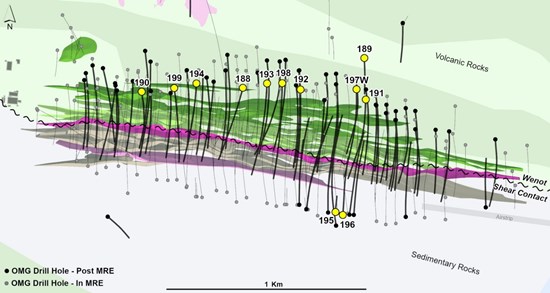
Figure 1. Plan Map of Wenot Deposit Showing Drill Hole Locations
Table 1. Recent Wenot Drill Results*
| DDH | FROM (m) | TO (m) | INTERVAL (m) | Grade (g/t Au) | Zone |
| 26ODD-188 | 209.5 | 212.5 | 3.0 | 0.77 | Volcanics |
| Central Wenot | 273.6 | 280.3 | 6.7 | 4.14 | Dike Corridor |
| 307.0 | 314.6 | 7.6 | 1.30 | ||
| 395.3 | 403.3 | 8.0 | 1.97 | CQFP | |
| Including | 395.3 | 397.9 | 2.6 | 4.25 | |
| 413.6 | 415.1 | 1.5 | 1.08 | Sediments | |
| 422.5 | 424.0 | 1.5 | 3.56 | ||
| 435.8 | 440.6 | 4.8 | 1.44 | ||
| 449.7 | 457.5 | 7.8 | 1.25 | ||
| 515.2 | 515.8 | 0.6 | 18.91 | South Porphyry | |
| 26ODD-189 | No significant intercepts | ||||
| 26ODD-190 | 76.5 | 78.0 | 1.5 | 0.64 | Volcanics |
| West Wenot | 149.6 | 163.5 | 13.9** | 3.15 | Dike Corridor |
| Including | 149.6 | 151.0 | 1.4 | 22.95 | |
| 168.8 | 171.5 | 2.7 | 1.29 | ||
| 193.8 | 196.4 | 2.6 | 8.03 | ||
| 230.6 | 238.9 | 8.3 | 1.63 | CQFP | |
| 247.0 | 248.5 | 1.5 | 1.22 | Sediments | |
| 279.5 | 280.3 | 0.8 | 1.16 | ||
| 300.5 | 302.0 | 1.5 | 1.12 | ||
| 308.0 | 317.8 | 9.8 | 2.00 | ||
| Including | 316.5 | 317.8 | 1.3 | 7.83 | |
| 323.5 | 324.5 | 1.0 | 5.85 | ||
| 333.5 | 337.9 | 4.4 | 2.73 | ||
| 385.4 | 388.7 | 3.3 | 3.52 | ||
| 26ODD-191 | 209.4 | 214.3 | 4.9 | 0.29 | Dike Corridor |
| East Wenot | 245.3 | 246.5 | 1.3 | 0.82 | |
| 302.2 | 310.1 | 7.9 | 0.94 | ||
| 335.0 | 336.5 | 1.5 | 0.94 | Dike Corridor | |
| 359.1 | 363.1 | 4.0 | 1.02 | ||
| 373.9 | 376.2 | 2.3 | 4.67 | ||
| 390.2 | 397.7 | 7.5 | 4.37 | ||
| Including | 391.6 | 304.6 | 3.0 | 6.90 | |
| 419.0 | 426.4 | 7.4 | 5.17 | ||
| Including | 420.5 | 424.9 | 4.4 | 8.04 | |
| 471.1 | 474.8 | 3.7 | 0.49 | ||
| 493.1 | 498.4 | 5.3 | 0.48 | CQFP | |
| 512.7 | 515.5 | 2.8 | 0.69 | Sediments | |
| 26ODD-192 | 99.5 | 100.5 | 1.0 | 1.25 | Dike Corridor |
| Central Wenot | 145.0 | 147.3 | 2.3 | 3.88 | |
| 174.9 | 185.6 | 10.7 | 4.12 | ||
| Including | 176.9 | 180.6 | 3.7 | 11.16 | |
| 243.5 | 257.5 | 14.0 | 2.71 | ||
| Including | 247.7 | 249.0 | 1.3 | 17.08 | |
| 280.5 | 286.1 | 5.6 | 4.15 | ||
| Including | 284.7 | 286.1 | 1.4 | 15.47 | |
| 333.0 | 368.0 | 35.0 | 0.97 | ||
| Including | 333.0 | 340.8 | 7.8 | 2.20 | |
| 417.5 | 419.5 | 2.0 | 0.79 | Felsic Rock | |
| 496.5 | 502.0 | 5.5 | 1.55 | Sediments | |
| 591.8 | 594.0 | 2.2 | 1.24 | Sediments and SQFP | |
| 26ODD-193 | 121.5 | 125.2 | 3.7 | 1.82 | Volcanics |
| Central Wenot | 183.4 | 184.5 | 1.1 | 4.66 | |
| 200.5 | 205.4 | 4.9 | 1.53 | Dike Corridor | |
| 238.0 | 242.2 | 4.2 | 1.10 | ||
| 246.5 | 247.9 | 1.4 | 6.94 | ||
| 266.3 | 268.4 | 2.1 | 3.17 | ||
| 305.3 | 307.9 | 2.6 | 6.45 | ||
| 347.5 | 388.0 | 40.5 | 5.12 | ||
| Including | 347.5 | 357.9 | 10.4 | 11.29 | |
| and Including | 347.5 | 352.0 | 4.5 | 18.35 | |
| 471.5 | 485.5 | 14.0 | 1.48 | CQFP, Protomylonite | |
| 495.2 | 521.2 | 26.0 | 1.37 | Sediments | |
| 26ODD-194 | 50.0 | 53.0 | 3.0 | 0.50 | Volcanics |
| Central Wenot | 85.7 | 92.0 | 6.3 | 0.54 | Dike Corridor |
| 171.3 | 186.0 | 14.7 | 2.20 | ||
| Including | 173.5 | 174.4 | 0.9 | 24.79 | |
| 213.0 | 220.9 | 7.9 | 5.24 | ||
| Including | 217.4 | 220.9 | 3.5 | 10.36 | |
| 235.5 | 238.9 | 3.4 | 2.11 | ||
| 303.5 | 310.5 | 7.0 | 1.27 | CQFP, Protomylonite | |
| 319.8 | 337.7 | 17.9 | 1.11 | ||
| 355.5 | 361.5 | 6.0 | 0.45 | Sediments | |
| 366.0 | 367.5 | 1.5 | 0.80 | ||
| 373.5 | 375.7 | 2.2 | 0.42 | Sediments | |
| 398.9 | 405.0 | 6.1 | 1.25 | ||
| 417.0 | 420.0 | 3.0 | 6.54 | ||
| including | 418.5 | 420.0 | 1.5 | 12.68 | |
| 439.5 | 446.4 | 6.9 | 0.83 | ||
| 493.0 | 499.0 | 6.0 | 1.06 | ||
| 510.8 | 511.8 | 1.0 | 0.84 | Southern Porphyry | |
| 26ODD-196 | 129.0 | 132.0 | 3.0 | 1.52 | Saprolite |
| 267.0 | 269.5 | 2.5 | 0.81 | Sediments | |
| 273.5 | 274.5 | 1.0 | 1.47 | ||
| 279.0 | 280.0 | 1.0 | 2.75 | ||
| 350.5 | 355.0 | 4.5 | 2.46 | ||
| Including | 354.0 | 355.0 | 1.0 | 6.92 | |
| 364.0 | 365.5 | 1.5 | 2.62 | ||
| 373.5 | 376.0 | 2.5 | 1.30 | ||
| 422.0 | 423.5 | 1.5 | 1.29 | Rhyolite | |
| 26ODD-197W | 280.4 | 284.5 | 4.1 | 0.72 | Volcanics |
| East Wenot | 323.7 | 325.3 | 1.5 | 0.98 | Dike Corridor |
| 377.8 | 390.8 | 12.9 | 2.72 | ||
| 402.5 | 418.5 | 16.0 | 2.16 | ||
| 439.8 | 480.5 | 40.7** | 2.68 | ||
| Includes | 439.8 | 455.5 | 15.7 | 3.81 | |
| including | 450.6 | 455.5 | 4.9 | 7.20 | |
| and includes | 460.8 | 466.5 | 5.7 | 3.77 | |
| and includes | 475.5 | 480.5 | 5.0 | 5.38 | |
| 551.6 | 558.5 | 6.9 | 0.39 | CQFP | |
| 562.1 | 564.7 | 2.7 | 1.25 | ||
| 573.7 | 574.7 | 1.1 | 1.20 | Mylonite | |
| 585.7 | 586.8 | 1.2 | 0.95 | Sediments | |
| 606.8 | 613.6 | 6.8 | 0.87 | ||
| 643.7 | 646.2 | 2.4 | 2.76 | ||
| 652.7 | 654.0 | 1.3 | 2.30 | ||
| 26ODD-198 | 116.5 | 118.0 | 1.5 | 0.75 | Volcanics |
| 136.6 | 139.5 | 2.9 | 0.93 | Dike Corridor | |
| 163.5 | 167.5 | 4.0 | 1.61 | ||
| 196.2 | 198.5 | 2.3 | 1.91 | ||
| 232.5 | 238.5 | 6.0 | 5.32 | ||
| 248.2 | 250.5 | 2.3 | 4.43 | ||
| 267.5 | 277.5 | 10.0 | 1.64 | ||
| 340.6 | 357.0 | 16.4 | 2.36 | ||
| including | 340.6 | 341.6 | 1.0 | 24.34 | |
| 378.0 | 379.5 | 1.5 | 0.67 | ||
| 458.1 | 469.0 | 10.9 | 1.01 | Diorite, CQFP | |
| 475.0 | 476.4 | 1.4 | 0.69 | Protomylonite | |
| 536.1 | 541.3 | 5.2 | 1.37 | Sediments, Diorite | |
| 549.1 | 554.3 | 5.2 | 0.66 | ||
| 620.5 | 642 | 21.5 | 2.29 | ||
| Includes | 627.3 | 636.7 | 9.4 | 4.61 | |
| including | 628.7 | 630.0 | 1.3 | 12.20 | |
| including | 635.3 | 636.7 | 1.4 | 9.79 | |
| 26ODD-199 | 154.9 | 159.3 | 4.4 | 0.84 | Dike Corridor |
| 226.9 | 236.5 | 9.7 | 3.78 | ||
| Including | 230.5 | 234.1 | 3.6 | 7.75 | |
| 269.9 | 272.1 | 2.3 | 1.90 | ||
| 284.2 | 294.8 | 10.6 | 1.67 | CQFP, Central Shear | |
| 305.2 | 320.2 | 15.0 | 1.80 | Sediments | |
| Including | 305.2 | 306.6 | 1.4 | 9.00 | |
| 356.7 | 358.7 | 2.0 | 1.25 | ||
| 368.1 | 369.6 | 1.5 | 1.06 | ||
| 461.5 | 469.6 | 8.1 | 0.78 | ||
| 486.6 | 492.7 | 6.1 | 0.88 | Southern Porphyry | |
*True widths vary as mineralization at Wenot is generally hosted within stockwork vein systems with alteration halos, with an estimated true width range of 70-90%. Cut-off grade 0.30 g/t Au with maximum 5.0m internal dilution is applied. All grades are uncapped unless otherwise noted. ** indicates internal dilution up to 7.5m
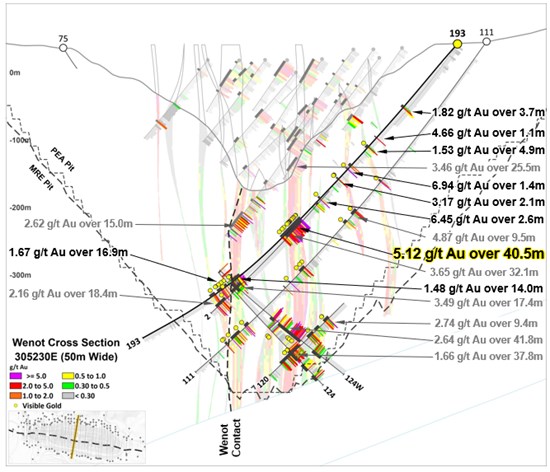
Figure 2. Cross-section for Hole 26ODD-193
Quality Control
Omai maintains an internal QA/QC program to ensure sampling and analysis of all exploration work is conducted in accordance with best practices. Certified reference materials, blanks and duplicates are entered at regular intervals. Samples are sealed in plastic bags.
Drill core samples (halved-core) were shipped to Act Labs, a certified laboratory in Georgetown Guyana, respecting the best chain of custody practices. At the laboratory, samples are dried, crushed up to 80% passing 2 mm, riffle split (250 g), and pulverized to 95% passing 105 μm, including cleaner sand. Fifty grams of pulverized material is then fire assayed by atomic absorption spectrophotometry (AA). Initial assays with results above 3.0 ppm gold are re-assayed using a gravimetric finish. For samples with visible gold and surrounding samples within deemed gold zones, two separate 250g or 500g pulverized samples are prepared, with 50 grams of each fire assayed by atomic absorption spectrophotometry, with assays above 3.0 ppm gold being re-assayed using a gravimetric finish. Certified reference materials and blanks meet with QA/QC specifications.
Qualified Person
Elaine Ellingham, P.Geo., is a Qualified Person (QP) under National Instrument 43-101 "Standards of Disclosure for Mineral Projects" and has reviewed and approved the technical information contained in this news release. Ms. Ellingham is a director and officer of the Company and is not considered to be independent for the purposes of National Instrument 43-101.
ABOUT OMAI GOLD
Omai Gold Mines Corp. is a Canadian gold exploration and development company focused on rapidly expanding the two orogenic gold deposits at its 100%-owned Omai Gold Project in mining-friendly Guyana, South America. The Company has established the Omai Gold Project as one of the fastest growing and well-endowed gold camps in the prolific Guiana Shield.
In April 2026, the Company announced an updated NI 43-101 Mineral Resource Estimate[2] (MRE) which included expansions to both the Wenot Deposit and Gilt Deposit. Most significantly, the Wenot Indicated MRE increased 49.8% to 1,453,000 ounces ("oz") of gold with an average grade of 1.59 g/t Au, contained in 28.4 million tonnes ("Mt") and the Wenot Inferred MRE increased 7.6% to 3,999,000 oz grading 1.35 g/t Au, contained in 92.4 Mt. Similarly, the adjacent Gilt Deposit saw an overall increase in ounces over the previous MRE. Gilt's Inferred MRE increased 120% to 1,465,000 oz averaging 3.22 g/t Au (in 14.2 Mt), while the Indicated MRE decreased by 9.5% to 1,042,000 oz averaging 3.33 g/t Au (in 9.7 Mt).
Five diamond drills are working on a 50,000m drilling program for 2026: at Wenot the focus is to further test the limits of the deposit, including both east and west, and to commence converting the large Inferred MRE to Indicated. Additional drilling will continue to explore certain known gold occurrences for possible near-surface higher-grade satellite deposits.
On August 19, 2026 the Company announced a PEA1 that included the large Wenot open pit deposit and the adjacent Gilt Creek underground deposit. The PEA supports a mine plan to produce 6.3 million ounces of gold over an 18 year mine life. Average gold production is projected at 351,000 ounces per year. The Omai site significantly benefits from existing infrastructure, including an on-site airstrip, and is connected by road to the two largest cities in Guyana, Georgetown and Linden.
For further information, please see our website www.omaigoldmines.com or contact:
Elaine Ellingham, P.Geo.
President & CEO
elaine@omaigoldmines.com
+1.416.473.5351
Table 2. Drill Hole Coordinates
Hole ID | Azimuth | Inclination | Easting | Northing | Length |
| (degrees) | (degrees) | (m) | |||
| 26ODD-188 | 196 | -47 | 305112 | 601862 | 523.7 |
| 26ODD-189 | 179 | -50 | 305722 | 602012 | 277.6 |
| 26ODD-190 | 173 | -45 | 304604 | 601843 | 421.4 |
| 26ODD-191 | 184 | -48 | 305729 | 601804 | 602.2 |
| 26ODD-192 | 180 | -45 | 305401 | 601854 | 604.6 |
| 26ODD-193 | 183 | -48 | 305233 | 601884 | 643.2 |
| 26ODD-194 | 185 | -45 | 304879 | 601885 | 520.0 |
| 26ODD-195 | Abandoned moved east to 196 | ||||
| 26ODD-196 | 005 | -48 | 305614 | 601223 | 430.3 |
| 26ODD-197 incomplete | 178 | -52 | 305682 | 601854 | 157.3 |
| 26ODD-197W | 178 | -52 | 305682 | 601854 | 654.0 |
| 26ODD-198 | 181 | -45 | 305309 | 601886 | 646.7 |
| 26ODD-199 | 173 | -45 | 304767 | 601861 | 500.2 |
Neither the TSX Venture Exchange nor its Regulation Services Provider (as that term is defined in the policies of the TSX Venture Exchange) accepts responsibility for the adequacy or accuracy of this release.
Cautionary Note Regarding Forward-Looking Statements
This press release contains statements that constitute "forward-looking information" (collectively, "forward-looking statements") within the meaning of the applicable Canadian securities legislation. Forward-looking statements contained in this press release include, without limitation, statements regarding the results, conclusions, projections, assumptions and economic and operating parameters of the PEA for the Omai Gold Project, including projected LOM, throughput, capital and operating costs, metal recoveries, payable production, NPV, IRR, annual EBITDA, cash costs, AISC and payback period and sensitivities thereto; statements regarding metal price assumptions; statements related to projected costs and Capex; timing of filing of the technical report for the 2026 PEA; statements related to potential social and economic benefits to the local community and Guyana as a result of development of the Omai Gold Project; statements relating to the Omai Gold Project as a profitable project for the Company; statements related to the Company's plans for power, water and tailings at the Omai Gold Project; statements relating to exploration, drilling and mineralization on the Company's Omai Gold Project; the interpretation of the results and benefits of the drilling program; future drilling and the timing and expected benefits thereof; potential resource expansion; assay results; the interpretation of drilling and assay results, the extent of mineralization and the discovery of zones of high-grade gold mineralization; future exploration and the focus and timing of same; the merits of the Omai Gold Project; future press releases by the Company; and funding of the ongoing drilling program. Although the Company believes that such statements are reasonable, it can give no assurance that such expectations will prove to be correct. Forward-looking statements are statements that are not historical facts; they are generally, but not always, identified by the words "expects", "plans", "anticipates", "believes", "interpreted", "intends", "estimates", "projects", "aims", "suggests", "indicate", "often", "target", "future", "likely", "encouraging", "pending", "potential", "goal", "objective", "opportunity", "prospective", "possibly", "preliminary", and similar expressions, or that events or conditions "will", "would", "may", "can", "could" or "should" occur, or are those statements, which, by their nature, refer to future events. In making the forward-looking statements contained in this press release, the Company has made certain assumptions, including, without limitation, assumptions regarding the accuracy of the MRE underlying the 2026 PEA; the validity of the technical, economic and operating assumptions used in the 2026 PEA (including assumed metal prices, exchange rates, recoveries, Capex and operating costs, mining and processing methods, throughput, ramp-up profile, ownership of legal title, capacity to store tailings, mine life and tax and royalty regimes); the availability of financing on acceptable terms to fund further development; the timely receipt of required permits and regulatory approvals; the absence of material adverse changes in commodity prices, capital markets and the regulatory and political environment; and the continued availability of qualified personnel and key contractors.
The Company cautions that forward-looking statements are based on the beliefs, estimates and opinions of the Company's management on the date the statements are made, and they involve a number of risks and uncertainties. Consequently, there can be no assurances that such statements will prove to be accurate and actual results and future events could differ materially from those anticipated in such statements. Such factors include, but are not limited to: the inherently preliminary nature of a preliminary economic assessment, including its reliance on inferred mineral resources that are considered too speculative geologically to have economic considerations applied to them and that may not ultimately be upgraded to higher-confidence categories or to mineral reserves; the risk that mineral resources are not mineral reserves and do not have demonstrated economic viability; risks that the assumptions underlying the PEA, including capital and operating cost estimates, metal recoveries and metal prices, availability of water and power, prove to be inaccurate; sensitivity of project economics to changes in commodity prices, exchange rates, capital costs and operating costs; the risk that further studies (including pre-feasibility and feasibility studies) yield results that differ materially from the PEA, or that mineral reserves are not ultimately established; the Company's ability to obtain financing on acceptable terms or at all; delay or failure to obtain required permits, regulatory approvals or surface rights required to advance the Omai Gold Project; environmental, social, taxation, title, legal, political, market, infrastructure and other risks affecting the development of the Omai Gold Project; risks relating to exploration and development of mineral properties generally; and general business, economic, competitive, political and social uncertainties. Except to the extent required by applicable securities laws and the policies of the TSX Venture Exchange, the Company undertakes no obligation to update these forward-looking statements if management's beliefs, estimates or opinions, or other factors, should change. The reader is urged to refer to the Company's most recent Management's discussion and Analysis, publicly available through the Canadian Securities Administrators' System for Electronic Document Analysis and Retrieval (SEDAR+) at www.sedarplus.ca for a more complete discussion of such risk factors and their potential effects.
Cautionary Note Regarding Mineral Resource Estimates
Until mineral deposits are actually mined and processed, Mineral Resources must be considered as estimates only. Mineral Resource Estimates that are not Mineral Reserves have not demonstrated economic viability. The estimation of Mineral Resources is inherently uncertain, involves subjective judgement about many relevant factors and may be materially affected by, among other things, environmental, permitting, legal, title, taxation, socio-political, marketing, or other relevant risks, uncertainties, contingencies and other factors described in the Company's public disclosure available on SEDAR+ at www.sedarplus.ca. Inferred Mineral Resource in the MRE have a lower level of confidence than that applied to an Indicated Mineral Resource and must not be converted to a Mineral Reserve. It is reasonably expected that the majority of the Inferred Mineral Resource could be upgraded to an Indicated Mineral Resource with continued exploration. The accuracy of any Mineral Resource Estimates is a function of the quantity and quality of available data, and of the assumptions made and judgments used in engineering and geological interpretation, which may prove to be unreliable and depend, to a certain extent, upon the analysis of drilling results and statistical inferences that may ultimately prove to be inaccurate. Mineral Resource Estimates may have to be re-estimated based on, among other things: (i) fluctuations in mineral prices; (ii) results of drilling, and development; (iii) results of future test mining and other testing; (iv) metallurgical testing and other studies; (v) results of geological and structural modeling including block model design; (vi) proposed mining operations, including dilution; (vii) the evaluation of future mine plans subsequent to the date of any estimates; and (viii) the possible failure to receive required permits, licenses and other approvals. It cannot be assumed that all or any part of a "Inferred" or "Indicated" Mineral Resource Estimate will ever be upgraded to a higher category. The MRE disclosed in this news release were reported using Canadian Institute of Mining, Metallurgy and Petroleum Definition Standards for Mineral Resources and Mineral Reserves in accordance with National Instrument 43-101- Standards of Disclosure for Mineral Projects of the Canadian Securities Administrators.
1 The PEA is preliminary in nature and includes inferred mineral resources that are considered too speculative geologically to have the economic considerations applied to them that would enable them to be categorized as mineral reserves, and there is no certainty that the PEA will be realized. Mineral resources ("Mineral Resources") that are not mineral reserves ("Mineral Reserves") do not have demonstrated economic viability.
2 Omai Gold Mines news release titled "Omai Gold Increases Indicated Mineral Resources to 2.5 Moz Au at 2.04 g/t Au (38.1 Mt) and Inferred to 5.5 Moz Au at 1.59 g/t Au (106.6 Mt) with Expansion of Wenot and Gilt Deposits" dated April 14, 2026
Source: Omai Gold Mines Corp.